



Applications of 3D printing filaments in industry: materials, areas of use, and benefits
Industrial manufacturing is rapidly transforming with highly specialized 3D printing filaments: whether heat-resistant high-performance plastics, flexible elastomers, or reinforced composite materials – companies achieve significant efficiency and innovation gains through additive processes. In this guide, you will learn which filament types dominate industrial 3D printing, in which industries they are used, what economic advantages they offer, and how to select the optimal material for your application. Furthermore, we highlight future trends, sustainability aspects, and concrete case studies to provide you with comprehensive guidance.
Which filament types are used in industrial 3D printing?
Industrial 3D printing filaments are defined by specific material properties, including mechanical strength, thermal resistance, and chemical stability. The choice of the right filament ultimately determines component performance and production reliability.
What are the properties of PEEK and PEI filaments for industrial applications?
PEEK and PEI belong to the high-temperature polymers that provide stability and strength even under extreme conditions. High-performance filaments like PEEK (Polyetheretherketone) and PEI (Polyetherimide) are characterized by the following features:
| Material | Heat resistance | Chemical resistance | mechanical stiffness | Flame retardancy |
|---|---|---|---|---|
| PEEK | up to 260 °C | very high resistance to solvents and oils | 3.6 GPa | UL94 V-0 |
| PEI (ULTEM™) | up to 200 °C | high resistance to acids and bases | 3.1 GPa | self-extinguishing |
This combination of temperature resistance and chemical stability enables companies to manufacture components for aerospace, medical technology, and automotive industries, where continuous stress and sterilization cycles are routine. The mechanical stiffness of the polymers and their flame retardancy ensure the highest reliability.
ASTM International, Standard Specification for Polyetheretherketone (PEEK) Materials (2023)
This specification provides detailed information on the properties and standards for PEEK materials, which supports the article's claims about its high-temperature resistance and chemical stability.
What advantages do TPU filaments offer for flexible industrial components?
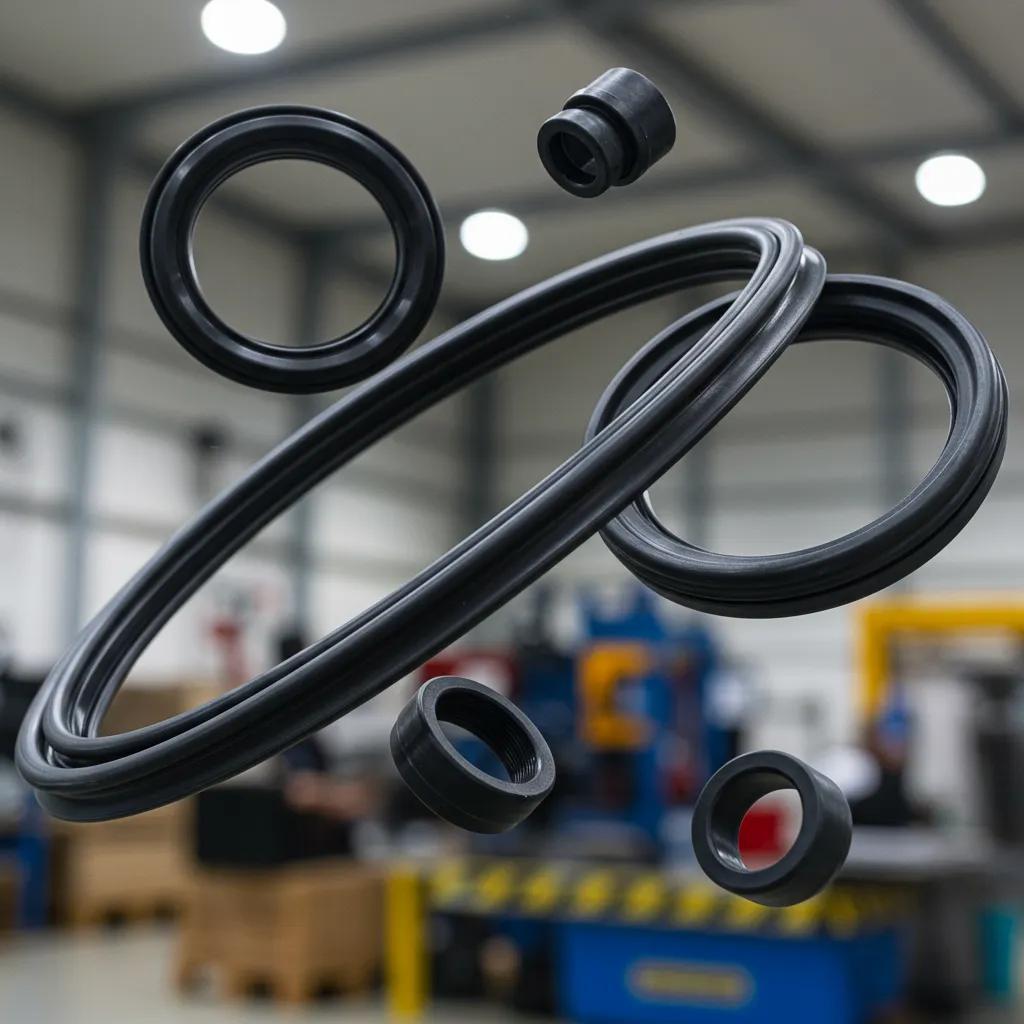
Thermoplastic polyurethanes (TPU) enable the additive manufacturing of flexible components with excellent abrasion and impact resistance.
- Flexibility and elasticity – TPU filaments allow recovery forces of up to 900% without material fatigue.
- Abrasion resistance – With values over 1000 cycles in the Taber test, seals and dampers are durable.
- Damping capacity – Elastic springs and buffers protect sensitive machine parts.
ISO 4649:2010, Rubber, vulcanized or thermoplastic — Determination of abrasion resistance using a rotating drum device (2010)
This standard provides a method for determining the abrasion resistance of rubber and thermoplastic materials, which supports the article's claims about the abrasion resistance of TPU filaments.
TPU components are found in shaft seals, vibration dampers, and shock-absorbing mounts because this material withstands dynamic load changes permanently and retains shape fidelity.
Why is PA (Nylon) filament suitable for robust industrial applications?
Nylon (PA) impresses with high tensile strength, impact resistance, and versatile processing options.
| Material | Tensile strength | Impact strength | Moisture Absorption | Application examples |
|---|---|---|---|---|
| PA6 | 55 MPa | high | 2–3 % | Gear wheels, bearing bushings |
| PA12 | 50 MPa | very high | 1 % | Housings, pipe brackets |
The balance between strength and toughness makes PA ideal for functional prototypes and small series in mechanical engineering, electrical engineering, and consumer goods manufacturing. Thanks to lower moisture absorption in PA12, dimensional accuracy and shape stability are maintained even in humid environments.
What special filaments like carbon fiber or ESD filaments are available for specific requirements?
Composite materials and conductive filaments open additional application focuses:
- Carbon fiber-reinforced filaments: increase bending and compressive strength by up to 60–80% at 15% fiber content.
- Glass fiber-filled filaments: increase stiffness and dimensional stability.
- ESD filaments: dissipate electrostatic charge over 10^4–10^8 Ω to protect sensitive electronics.
With these specialized materials, lightweight components with metal requirements and antistatic parts for electronic assemblies can be economically produced.
In which industries are 3D printing filaments used?
The range of industrial applications spans from prototyping to end production. Additive manufacturing with filaments is gaining strategic importance in several industries.
How does 3D printing support the automotive industry in prototyping and end-use parts?
In the automotive industry, 3D printing significantly accelerates the development cycle:
- Toolmaking – custom workshop tools for assembly and testing processes within a few hours.
- Functional prototypes – realistic models made from PA or TPU for fit tests and approvals.
- Series parts in small batch sizes – cost-efficient production of special components such as brackets or clips.
Rapid iteration shortens time-to-market and minimizes expensive tooling costs, while the material variety ranges from standard PA to high-performance plastics.
What role do filaments play in aerospace for lightweight construction and high-performance components?
For aerospace applications, weight reduction and resistance to temperature fluctuations are crucial.
| Filament | Function | Advantage |
|---|---|---|
| PEEK | Structural components near engines | Weight savings and temperature resistance |
| CF-PA | Cockpit components | High stiffness with low weight |
| PEI | Electronic insulators | Flame retardant and sterilization compatible |
The use of these materials reduces fuel consumption and ensures safety under extreme air and temperature conditions.
How are 3D printing filaments used in medical technology for prostheses and implants?
Biocompatible filaments enable patient-specific solutions:
- TPU-metal composites for flexible prosthetic components.
- PEI/PEEK instruments for reusable surgical tools.
- PLA models for preoperative planning and training.
The ability to generate custom fits supports healing processes and reduces inventory costs for standard instruments.
What applications exist in mechanical and plant engineering for spare parts and fixtures?
Rapid prototyping and spare parts production reduce downtime:
- Replacement gears made of PA6 for repaired production lines.
- Assembly fixtures made of nylon and TPU for flexible component clamping.
- Protective covers and housings made of ABS and PETG for machine parts.
Additive manufacturing with industrial filaments enables the production of precisely fitting components without minimum batch sizes.
What advantages does industrial 3D printing with filaments offer?
How does 3D printing contribute to cost efficiency and material savings?
Significant savings result from eliminating tooling investments and minimizing waste:
| Cost factor | Traditional process | Filament 3D printing | Savings |
|---|---|---|---|
| Tooling costs | €5,000 per mold | not applicable | 100 % |
| Material waste | 15 % of raw material | < 5 % | 67 % |
| Setup time | 8 h | < 1 h | 88 % |
The high return on investment is achieved after just a few small series projects and sustainably improves production efficiency.
Why does 3D printing enable more design freedom and complex components?
Additive processes realize geometries that subtractive methods make impossible:
- Internal lattice structures reduce weight while maximizing stability.
- Cavitation channels and integrated cooling channels in injection molding tools.
- Freeform surfaces for aerodynamic optimization.
Design freedom leads to high-performance components with low weight and higher functionality.
How does 3D printing accelerate prototype development and time-to-market?
Immediate printability of digital models reduces development cycles:
- CAD → print start in < 2 h
- First stress tests already on the same day
- Iterations in 24-hour cycles
Rapid availability of prototypes saves weeks in testing and approval processes.
What challenges exist in industrial filament printing and how are they solved?
Common hurdles are adhesion problems, warping, and surface roughness. Solutions:
- Heated build platforms and enclosure temperature control for PEEK.
- Special coatings or adhesives for PA and TPU.
- Post-processing by grinding, chemical smoothing, or coatings.
Consistent component quality is achieved through process parameter management and material adjustment.
Which future trends and innovations shape the development of 3D printing filaments in industry?
Which new filament materials and high-performance filaments are in development?
Researchers focus on:
- Intelligent filaments with integrated sensor and temperature feedback.
- High-temperature ceramic composites for > 350 °C.
- Fiber-reinforced biopolymers as hybrid materials.
These material classes open up completely new application scenarios in energy, aerospace, and chemical plants.
How does 3D printing integrate into Industry 4.0 and digital manufacturing concepts?
Networked printing systems communicate via IoT:
- Live monitoring of print parameters and quality metrics.
- Automated material management and supply control.
- AI-supported process optimization for print runtime and component quality.
Plug-&-play integration in smart factory environments increases efficiency and utilization.
What role do sustainable and biodegradable filaments play in industry?
| Type | Material | Benefit | Recyclability |
|---|---|---|---|
| Bio-based PLA | Polylactic acid | CO₂-neutral production | Compostable |
| Recycled PETG | Post-consumer PET | Circular economy | Mechanically recyclable |
| PHB composite | Polyhydroxybutyrate | Biodegradable | Industrially compostable |
Sustainable polymers reduce CO₂ footprint and comply with regulatory requirements.
How to choose the right 3D printing filament for industrial applications?
Material selection determines component function and reliability. Multiple parameters lead to the ideal decision.
Which criteria are important when selecting filaments for specific industries?
Essential selection factors:
- Temperature resistance for engine compartment or turbine components.
- Chemical resistance in laboratory equipment and chemical plants.
- Mechanical stress in load-bearing components and machine elements.
- Biocompatibility in medical technology and the food industry.
A systematic comparison of these criteria with filament data ensures compatibility.
How to compare mechanical and thermal properties of different filaments?
Comparison tables consolidate relevant key data:
| Plastic | Tensile strength | Heat deflection temperature | Operating temperature |
|---|---|---|---|
| ABS | 40 MPa | HB (up to 90 °C) | –20 °C to 80 °C |
| PETG | 50 MPa | V-2 (up to 70 °C) | –20 °C to 70 °C |
| PEEK | 80 MPa | UL94 V-0 (up to 260 °C) | –50 °C to 260 °C |
Such comparisons allow quick classification for production use.
Which printing technologies match which filament types?
- FDM/FFF – standard polymers (PLA, ABS, PETG, TPU, PA).
- High-Temperature FDM – high-performance filaments (PEEK, PEI) with closed temperatures.
- SLS – powder-based filaments (PA12, PA11) for complex shapes without support structures.
- Binder Jetting – ceramic and metal filaments for functional prototypes.
Targeted assignment ensures component quality and process stability.
Which specific application examples and case studies demonstrate the use of 3D printing filaments in industry?
How are PEEK filaments used in aerospace for lightweight components?
Case study: engine component with PEEK structure
- Requirement: high temperature resistance in the exhaust turbocharger
- Solution: PEEK lattice structure replaces aluminum component
- Result: 30% weight savings, ± 0.1 mm dimensional accuracy at 250 °C continuous use
Corporate customers report a leap in efficiency and reduced maintenance frequency.
What advantages do TPU filaments offer for flexible seals in the automotive industry?
Practical case: seal application in cooling system
- Problem: conventional rubber seals tend to leak under vibration
- Measure: TPU seal with 800% elongation and recovery force
- Benefit: 50% longer lifespan, reduced assembly costs
These seals improve tightness and reduce service intervals.
How does 3D printing support medical technology with biocompatible filaments?
Application example: patient-specific implant models
- Material: biocompatible PEI for preoperative models
- Process: digital scan data → directly printable model
- Advantage: exact fit, 20% shorter surgery time
Individualized planning increases patient safety and reduces surgery effort.
Which cost and sustainability aspects should be considered in industrial 3D printing with filaments?
How does 3D printing affect the total manufacturing costs?
Material and process costs decrease while storage and tooling expenses are eliminated:
- Reduced inventory through on-demand production
- Minimized setup times without mold change
- Shortened supply chain and reduced transportation expenses
Overall, this leads to 30–50% lower total unit costs per part.
What sustainable filament options are available and how do companies benefit from them?
- PLA from corn starch reduces CO₂ footprint by up to 60%.
- RePETG from recycled materials improves circularity.
- PHB composite decomposes industrially compostable.
Companies score with environmental certificates and meet regulatory requirements.
How does 3D printing contribute to reducing downtime and delivery bottlenecks?
| Situation | Conventional way | Additive manufacturing | Savings |
|---|---|---|---|
| Machine downtime | 2 weeks delivery time | 4 hours printing time | 97 % |
| Small series requirement | Minimum batch size 500 pieces | produce from 1 piece | 100 % |
This results in significantly increased production efficiency and flexibility.
The integration of specialized filaments into industrial 3D printing processes enables companies across industries to gain significant competitive advantages. Seize the opportunity now to accelerate your product development and sustainably reduce costs with high-performance materials and digital manufacturing concepts. Contact our expert team to discover individual technology solutions for your requirements and take your projects to the next level.


